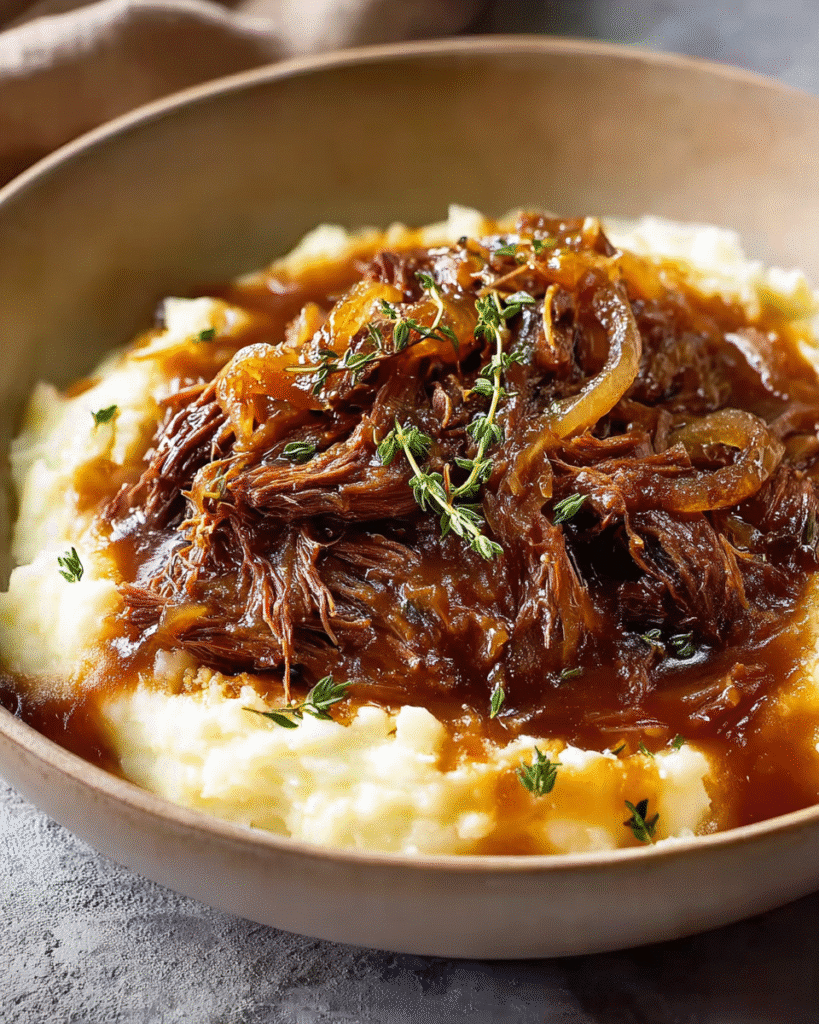
Introduction:
This guide shows you how to make a classic dish that combines French onion flavors with a traditional pot roast. It’s written in a clear, informative style, aimed at teaching you to make a restaurant-quality meal at home. It’s perfect for cooks in the United States looking for an easy, comforting dinner that fills your home with delicious smells.
The recipe focuses on a slow cooker pot roast that creates deep, caramelized onion flavor and tender beef. You’ll learn a step-by-step guide to making a savory pot roast in a slow cooker or oven. The article will explain why this French onion pot roast is special, list ingredients and prep tips, and guide you through both cooking methods. It will also show you how to finish the rich onion gravy and offer serving suggestions.
This guide is for home cooks seeking a comforting meal for weeknights or weekends. It includes tips for making ahead and achieving consistent results. It’s great for anyone looking for a homemade pot roast with onion gravy or delicious French onion roast beef. It’s a reliable, easy dinner to serve your family and friends.
- Introduction:
- Why This French Onion Pot Roast Is the Best Comfort Food
- Ingredients and Prep for an Easy Pot Roast Dinner
- How to Cook a Slow Cooker Pot Roast: Step-by-Step Guide
- Conclusion
- FAQ
Why This French Onion Pot Roast Is the Best Comfort Food
This French onion pot roast takes the classic pot roast to new heights. It puts caramelized onions at the heart of the dish. This adds a rich, savory flavor, thanks to the onions, beef broth, and beef.
The result is a thick, glossy gravy that sticks to your fork. It’s a game-changer for comfort food lovers.
What makes it different from a classic pot roast
A traditional pot roast focuses on beef and basic herbs. But this version puts onions first. It uses long-caramelized onions and a beefy jus for a deeper flavor.
The onions add sweetness and umami, making it more complex than usual. This dish has a silky sauce that’s unlike a traditional pot roast.
Flavor profile: savory pot roast recipe with caramelized onions and rich gravy
This recipe combines beefy umami with sweet onions and stock. A bit of balsamic or Worcestershire adds a tangy touch. Fresh thyme, bay leaves, and parsley add a fragrant aroma.
The beef is tender and falls apart easily, covered in a rich onion gravy. A splash of red wine or sherry can enhance the flavor. Serve it with mashed potatoes, egg noodles, or crusty bread to enjoy the sauce. Add roasted vegetables or a green salad to balance the meal.
Benefits of slow cooking for tenderness and depth
Slow cooking breaks down tough cuts of meat. It turns collagen into gelatin, making the meat tender. This method also thickens the sauce naturally.
Long braising intensifies the flavors. The Maillard reaction and caramelized onions create a deep, savory-sweet taste. Slow cooking is convenient and allows flavors to improve overnight.
Ingredients and Prep for an Easy Pot Roast Dinner
Getting ready for a French onion pot roast is easy. You just need the right ingredients and tools. This way, your braise will be full of flavor and your onion gravy smooth.
Choosing the best beef pot roast cut
For a tender and flavorful roast, choose a well-marbled cut. Chuck roast is the best choice for its rich taste. Bottom round is leaner, and brisket is fattier but tender.
For a family dinner, a 3–4 lb roast is perfect. Cook time will vary with the size. Always follow safe food handling practices. Long cooking breaks down the meat, not just by temperature.
Key ingredients for homemade pot roast with onion gravy
For a great pot roast, you’ll need a 3–4 lb beef roast, 3–4 large onions, and 2–3 cups of beef broth. Add a splash of red wine for extra flavor.
Season with Worcestershire sauce and tomato paste for depth. Use garlic, thyme, and bay leaves for extra taste. You can also add mushrooms, carrots, or potatoes for a hearty meal.
To make it even better, add cognac or sherry. Top with Gruyère cheese for a fancy touch. Thicken the gravy with cornstarch or let it reduce for a richer flavor.
Ingredient substitutions and make-ahead tips
Feel free to substitute ingredients. Use low-sodium stock and balsamic vinegar for different flavors. Soy sauce and dried thyme can replace other ingredients.
Save time by caramelizing onions ahead of time. Sear the roast, then chill it overnight. Finish cooking the next day for even better flavors.
Store leftovers safely in the fridge for up to four days. Freeze cooked slices for up to three months. These tips make your pot roast dinner easy and comforting.
How to Cook a Slow Cooker Pot Roast: Step-by-Step Guide
This guide shows you how to make a tasty french onion roast beef. It covers onion prep, searing, and gravy finishing. You’ll learn how to serve it too, so it fits your kitchen and schedule.
Preparing the onions: caramelizing for depth
Cut 3–4 large yellow onions into thin half-moons. Heat a heavy skillet over medium-low. Add 1–2 tablespoons of olive oil or unsalted butter.
Stir the onions occasionally for 30–45 minutes until they are deeply browned and sweet. Add a pinch of salt early to draw out moisture. An optional teaspoon of sugar can help speed browning.
Near the end, deglaze the pan with a splash of red wine, dry sherry, or beef stock. This lifts the fond. Proper caramelization makes the pot roast taste richer and more complex.
Searing the roast for maximum flavor
Pat the roast dry with paper towels and season generously with kosher salt and freshly ground black pepper. Heat 1–2 tablespoons of neutral oil in a Dutch oven or cast-iron skillet over medium-high.
Sear the roast on all sides until a deep brown crust forms, about 2–4 minutes per side. Don’t forget the edges. Use tongs to turn and avoid overcrowding the pan; sear in batches if needed.
After searing, deglaze the pan with wine or stock. Scrape the browned bits into the braising liquid to boost flavor.
Slow-cooker vs. oven methods: times and temperature
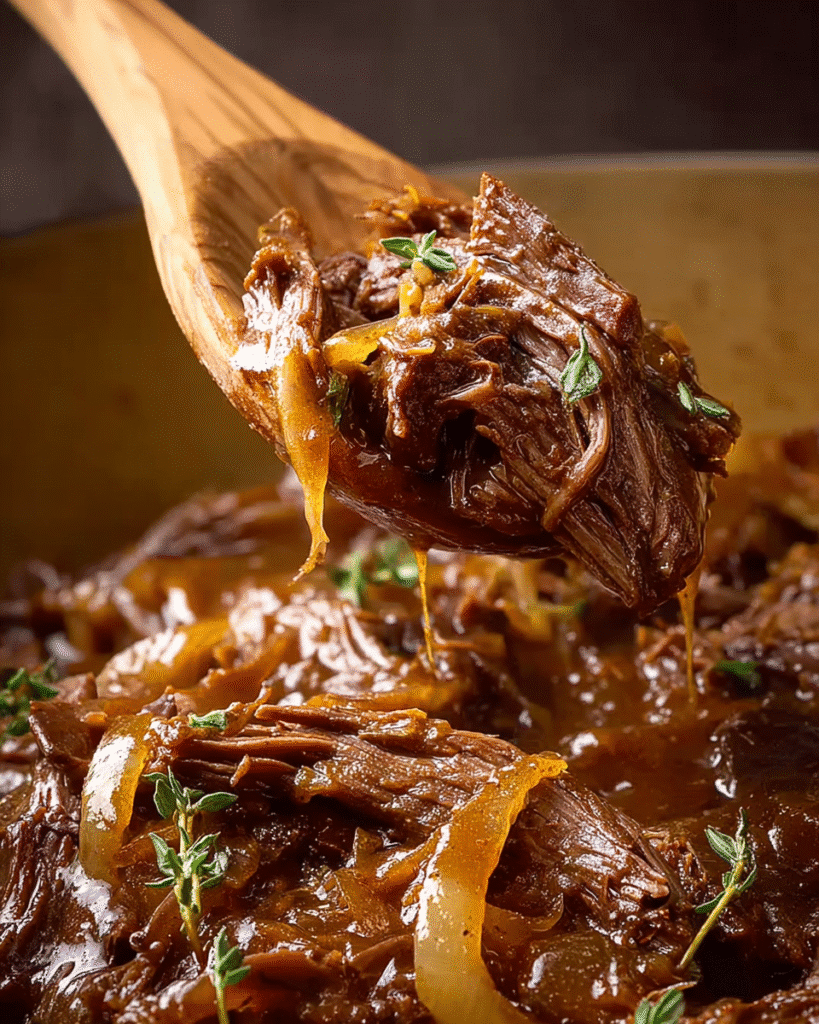
For the slow cooker pot roast, place the caramelized onions and seared roast in the insert. Add aromatics, 2–3 cups beef broth, 1–2 tablespoons Worcestershire sauce, and a few thyme sprigs and bay leaves. Cook on LOW for 8–9 hours or on HIGH for 4–5 hours until fork-tender.
For an oven braise, preheat to 300°F. In a covered Dutch oven combine the roast, onions, and braising liquid. Cook at 300°F for 3–4 hours for a 3–4 lb roast until the meat pulls apart easily. Larger roasts require more time; focus on tenderness.
Add potatoes and carrots in the last 1–2 hours so they stay firm.
Finishing the gravy and serving suggestions
Remove the roast and tent it to rest. Strain the braising liquid and skim excess fat. Reduce the liquid on the stovetop to concentrate flavor.
Thicken with a cornstarch slurry or a beurre manié until the sauce coats the back of a spoon. Taste and adjust seasoning with salt, pepper, and a splash of balsamic or red wine vinegar for brightness.
Slice or shred the roast and ladle the onion gravy over the meat. Garnish with chopped fresh parsley. Serve with creamy mashed potatoes, buttered egg noodles, roasted root vegetables, or crusty sourdough.
For a French onion-style finish, top slices with a thin toasted baguette round and a blanket of Gruyère. Then broil briefly to melt and brown.
Leftovers and reheating
Reheat gently in a covered skillet with a splash of beef stock to preserve moisture. Freeze portions in airtight containers with gravy for best results. This keeps the rich flavor of the french onion roast beef for later meals.
Conclusion
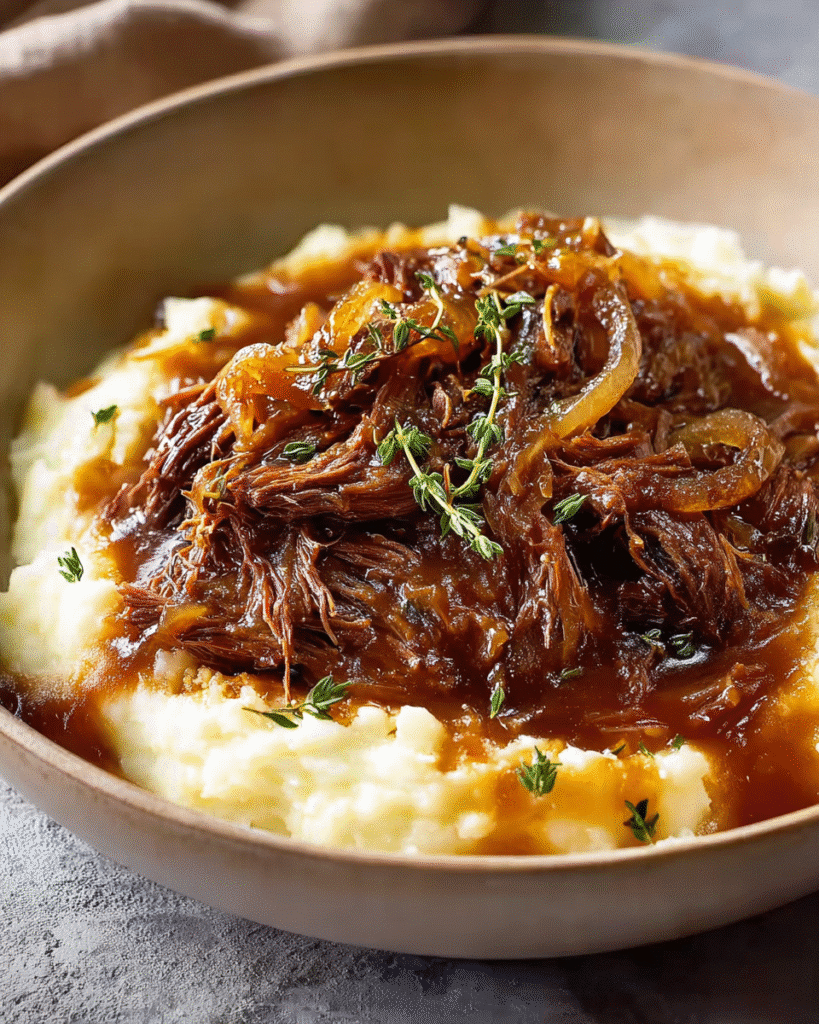
The French onion pot roast is a masterpiece of flavors. It combines caramelized onions with slow-cooked beef for a tender dish. The result is a rich, silky gravy that makes it a standout for any meal.
It’s easy to make, thanks to the slow cooker option. This is perfect for those with busy schedules. For those who love traditional cooking, the oven braise is the way to go.
Feel free to get creative with ingredients and prep ahead. Swap broth types or use different herbs. Preparing the onions early saves time without sacrificing flavor.
Choosing a chuck roast and cooking it low and slow is key. Letting the meat rest allows flavors to meld and juices to redistribute. Leftovers are even better the next day, making it a great choice for family meals.
Pair the roast with mashed potatoes, egg noodles, or crusty bread for a delicious meal. This recipe is perfect for anyone looking for a tasty French onion pot roast or a classic pot roast with onions. It’s a comforting dish that’s sure to please.
FAQ
What cut of beef is best for a French onion pot roast?
The best cut for a slow-cooked French onion pot roast is a well-marbled braising cut. Chuck roast, also known as blade roast, is ideal. It has consistent marbling and becomes tender during long, low cooking.Bottom round and brisket are also good choices. Brisket is fattier, while round is leaner. So, adjust cooking time and check tenderness instead of relying on temperature.
How long should the roast cook in a slow cooker versus the oven?
For a 3–4 lb roast, cook in a slow cooker on LOW for 8–9 hours. Or, on HIGH for 4–5 hours until it’s fork-tender. For oven braising, preheat to 300°F and cook in a covered Dutch oven for about 3–4 hours.Larger roasts may need more time. Check for collagen breakdown and easy shredding instead of a specific thermometer reading.
Why are the onions caramelized first, and how long does that take?
Caramelizing onions creates the sweet-savory backbone of the French onion profile. Thinly sliced yellow onions cooked over medium-low with oil or butter develop deep brown color and concentrated flavor.Expect 30–45 minutes for proper caramelization. Deglaze with wine or stock at the end to lift fond into the braising liquid.
Can this recipe be made ahead and reheated without losing quality?
Yes. Flavors often improve after resting 12–24 hours. Caramelize onions up to 2 days ahead and refrigerate.The roast can be fully cooked, cooled, and refrigerated. Reheat gently in a covered pan with a splash of stock to preserve moisture. Refrigerate leftovers within 2 hours, use within 3–4 days, or freeze portions up to 3 months.
How is the onion gravy finished and thickened without flour?
After removing and resting the roast, skim fat and reduce the braising liquid on the stovetop to concentrate flavor. To thicken without traditional flour, whisk in a cornstarch slurry (1 tbsp cornstarch + 1 tbsp cold water) until glossy and slightly thickened.A beurre manié (equal parts butter and flour) is another option if flour is acceptable.
What wine or substitutes work for deglazing and adding brightness?
A dry red wine or dry sherry adds complexity when deglazing. If avoiding alcohol, use additional beef stock with a splash of balsamic vinegar to provide acidity and brightness. Worcestershire sauce or soy sauce also contributes umami if wine isn’t available.
Can vegetables be cooked with the roast, and when should they be added?
Yes. Add hearty root vegetables—carrots, baby potatoes, parsnips—during the last 1–2 hours of cooking so they become tender but not mushy. Smaller or quick-cooking vegetables should be added later to avoid overcooking.Alternately, roast vegetables separately for optimal texture.
What are good serving suggestions for a French onion pot roast?
Serve sliced or shredded roast with plenty of onion gravy over creamy mashed potatoes, buttered egg noodles, or crusty sourdough for mopping up sauce. Roasted root vegetables or a simple green salad help cut richness.For a French onion finish, top slices with toasted baguette and melted Gruyère under the broiler.
How should leftovers be stored and reheated for best results?
Cool leftovers within 2 hours, store in airtight containers, and refrigerate for 3–4 days or freeze for up to 3 months (slice before freezing for easier reheating). Reheat gently over low heat in a covered skillet with a splash of stock, or warm in a low oven to preserve moisture and texture.
Are there easy substitutions for key ingredients without sacrificing flavor?
Yes. Use low-sodium beef stock instead of regular stock for better salt control. Substitute balsamic vinegar for wine to add acidity, and use soy sauce if Worcestershire isn’t available. Dried thyme can replace fresh at one-third the amount.Instant caramelized onion bases can be used in a pinch, though fresh caramelized onions yield the best depth.
Can this recipe be adapted for dietary restrictions like low-sodium or gluten-free?
This recipe adapts well. Use low-sodium beef stock and reduce added salt for a low-sodium version. For gluten-free, verify Worcestershire sauce is gluten-free or use tamari, and thicken the gravy with a cornstarch slurry instead of flour-based roux or beurre manié.